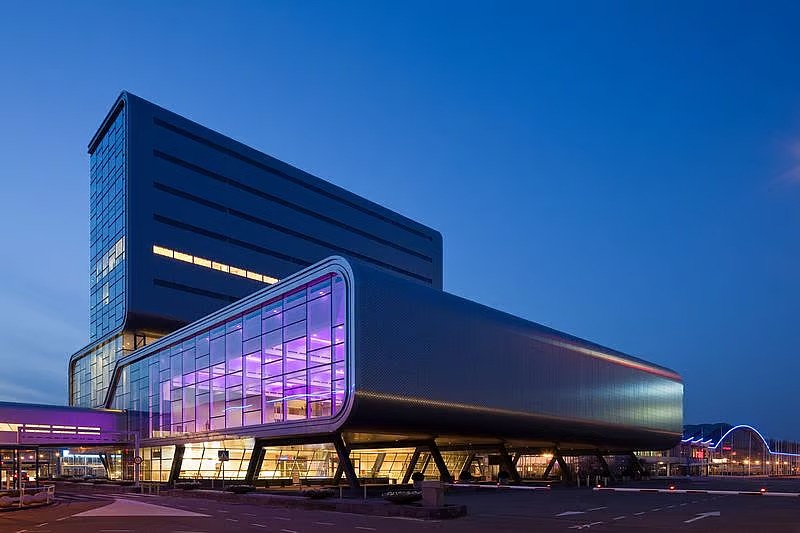
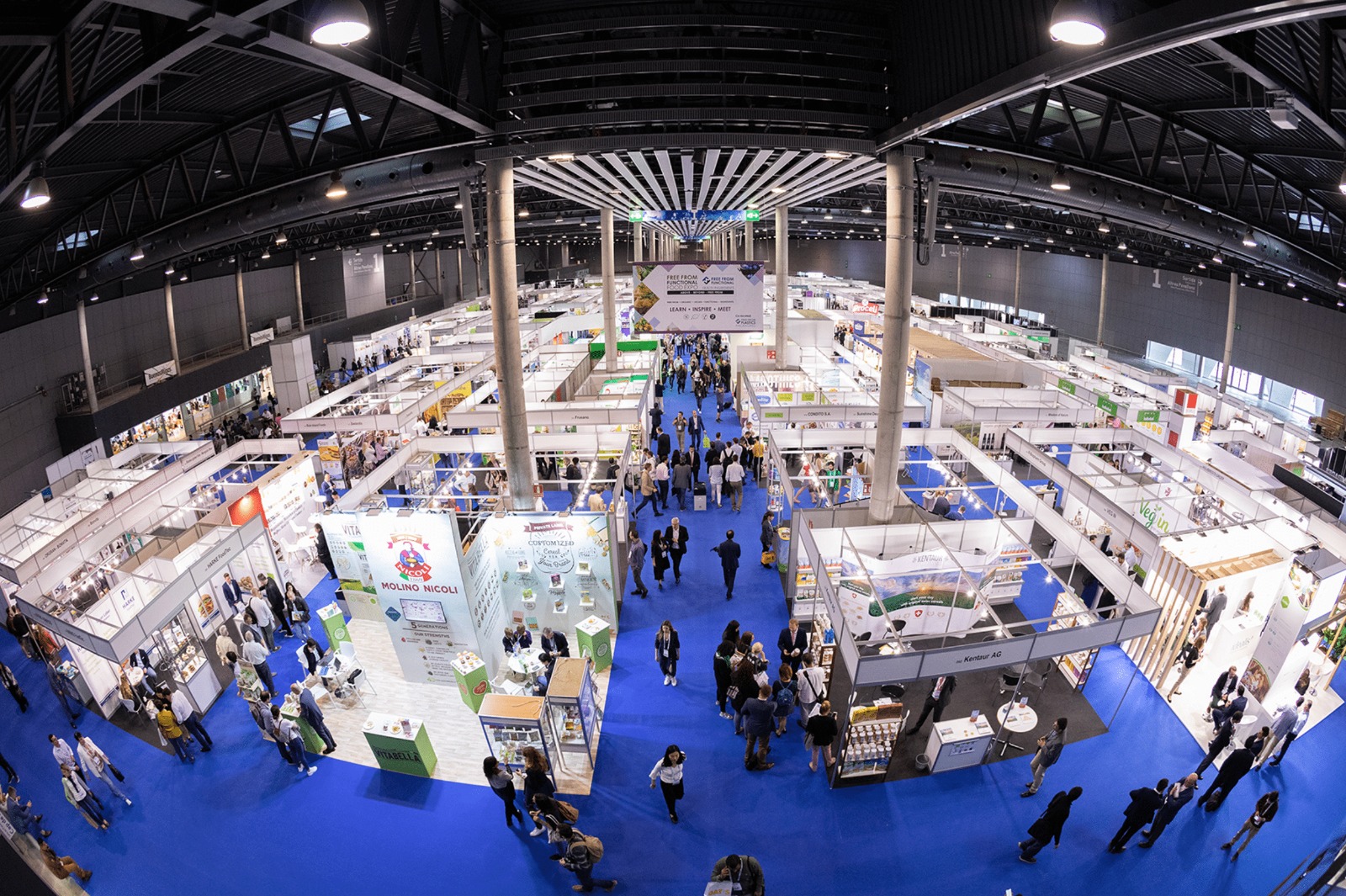
VENUE PHOTOGRAPHY
·
RAI Amsterdam, Europaplein 2–4, 1078 GZ Amsterdam
A comprehensive strategic assessment covering economic impact, technology evolution, business model sustainability, leadership, organisational culture & the Doughnut Economy framework.
RAI Amsterdam is one of Europe's premier exhibition and convention centres, operating from a 110,000 m² venue in Amsterdam. Founded in 1893, it hosts over 700 events per year and employs approximately 1,400 people. This report analyses the organisation across six strategic themes as part of the Connecting the Dots course at Windesheim University of Applied Sciences.
How RAI Amsterdam creates value, which sectors it operates in, its contributions to adjacent sectors, and the balance between value creation and value extraction — assessed with direct, indirect, and induced economic impact.
| Category | Jobs | FTE Equivalent |
|---|---|---|
| RAI Staff (direct) | 1,400 | 1,280 |
| Event Staff (seasonal) | 3,200 | 800 |
| Hotel & Hospitality | 4,500 | 3,200 |
| Transport & Logistics | 1,800 | 1,400 |
| Retail & Services | 2,100 | 1,600 |
| Total | 13,000+ | 8,280 |
Every €1 of direct RAI revenue generates an estimated €2.46 in total economic activity across the Amsterdam region — consistent with major MICE venues in comparable European cities (Oxford Economics, 2020).
Assessment: primarily a value creator. RAI acts as a catalyst enabling economic exchange between international industries. Its public ownership structure (Amsterdam municipality is a major shareholder) reinforces the public-value mission over pure profit maximisation.
Extraction-leaning elements exist: reliance on temporary/seasonal labour and the concentration of premium pricing benefits for shareholders rather than seasonal workers represent areas where value creation is incomplete. These are addressed in the advice below.
Distinction between direct, indirect, and induced impact is key to RAI's strategic positioning with Amsterdam municipality:
A 30-year retrospective (1993–2025) and 20-year forward view (to 2045) of technology adoption at RAI Amsterdam, covering implications for operations, employees, and management at each stage. Click timeline entries to expand.
| Technology | Horizon | Impact |
|---|---|---|
| AI Attendee Personalisation | 2025–26 | High |
| Digital Twin Venue Modelling | 2025–26 | High |
| Carbon Tracking AI (Scope 3) | 2025–27 | High |
| 5G Private Network | 2026–27 | High |
| AR Exhibition Overlays | 2027–29 | Medium |
| Robotic Logistics (setup) | 2027–30 | High |
| Blockchain Ticketing | 2028–30 | Medium |
| Metaverse Exhibition Space | 2030+ | Transformative |
Click any node to highlight. Each stage integrates HRIS tools (Workday HCM / SAP SuccessFactors), AI analytics, and DEI metrics — forming a closed feedback loop from workforce planning to succession.
Technologies to adopt now (2026): AI Attendee Personalisation Engine (pilot at METSTRADE), Digital Twin for venue planning, Carbon Tracking AI for Scope 3 transparency, 5G private network for real-time event data.
HR tools recommended: Workday HCM for integrated talent management, LinkedIn Talent Insights for labour market analytics, Coursera for Business for tech-skills upskilling, Culture Amp for continuous engagement measurement and burnout risk detection.
Recruiting & maintaining future employees: Target Windesheim University of Applied Sciences, Hogeschool van Amsterdam, and TU Delft (for IoT/data roles) through dedicated internship pathways and hackathons. Use AI-assisted blind screening to improve DEI in candidate selection. Employer branding must emphasise RAI's sustainability mission to attract purpose-driven Gen Z talent (Deloitte, 2025). Flexible work arrangements and continuous learning investment are essential for retention in Amsterdam's competitive labour market.
Analysed using the Business Model Canvas (Osterwalder & Pigneur, 2010). RAI's model is examined for sustainability against current economic trends, with entrepreneurship characterised as both traditional and innovative, and worthwhileness assessed.
RAI's model faces three structural pressures (2025–2026 context) threatening long-term sustainability:
Characterisation: predominantly traditional, with growing innovative elements
Tracing approximately 30 years of leadership styles at RAI Amsterdam — from hierarchical command-and-control to today's collaborative management. Future-fit leadership styles are proposed with a view to employee needs, organisational performance, and 21st-century challenges.
During RAI's consolidation phase, management was characterised by transactional leadership (Burns, 1978) — clear reward/punishment systems, strict chain-of-command, and performance measured against defined KPIs. Directors operated within functional silos: Operations, Sales, Finance, and Events rarely collaborated cross-departmentally.
Multiple styles coexisted: operational managers used highly directive styles while sales directors adopted more relational approaches with key accounts. This was effective during stable growth years but produced rigidity during market shifts and limited upward innovation. The approach reflected the predominantly Dutch command structure typical of large physical-infrastructure organisations of the era (Hofstede, 1980).
Under major strategic leadership, RAI shifted toward transformational leadership (Bass & Avolio, 1994) — articulating a compelling vision for RAI as "the international meeting place of Amsterdam," investing in staff development, and driving major capital renovations (Glass Foyer, new halls). Leaders inspired beyond self-interest, attracting institutional loyalty.
This era saw RAI's international brand reach its peak, hosting INTERCLEAN International and major sectoral congresses. Different styles coexisted: transactional reward structures remained in operations while transformational vision drove strategic investment decisions. Leadership directly correlated with competitive market position.
Responding to increasing workforce expectations and a growing sustainability agenda, RAI adopted elements of servant leadership (Greenleaf, 1977) — managers prioritising employee development, transparent communication, and stakeholder value over personal authority. CSR became embedded in leadership KPIs for the first time.
Flat structures were introduced in event operations teams. Cross-functional project teams replaced permanent silos for major projects. The Dutch polder model influence was highly visible: consultation and consensus became core leadership norms, aligning well with national cultural expectations (Hofstede Insights, 2024).
COVID-19 imposed the most severe operational shock in RAI's history — revenue dropped ~90% in 2020. Leadership was tested on adaptive capacity (Heifetz et al., 2009): holding the organisation through existential uncertainty, pivoting to virtual events within weeks, negotiating with municipality for bridge financing, and protecting the majority of the workforce through government schemes.
Psychological safety, transparent communication, and rapid iteration became defining leadership characteristics that shaped the post-COVID culture. By 2024, RAI had fully recovered, with revenue surpassing pre-COVID levels — validating adaptive leadership effectiveness. Interview [Job Knook, I-1] confirmed that the hybrid event model now demanded continuous leadership flexibility, not a one-time crisis response.
Future RAI employees — predominantly Millennials and Gen Z — prioritise purpose, autonomy, growth, and psychological safety (Deloitte Global Gen Z Survey, 2025). Traditional hierarchical or purely transactional leadership will fail to attract and retain talent against Amsterdam's competitive tech and creative sectors.
Current transitional style (adaptive + servant) is a strong foundation. To be truly future-fit: (1) formalise distributed leadership through a squad model with empowered team leads; (2) invest in coaching capability across all 80+ team leaders — partnering with a business school; (3) introduce people analytics dashboards for managers; (4) link leadership KPIs explicitly to employee wellbeing and engagement scores, not solely delivery metrics. This shift will improve retention, accelerate digital transformation, and increase RAI's position as Amsterdam's premier event-industry employer.
Using Hofstede's Cultural Dimensions (1980, 2001) and the Competing Values Framework (Quinn, 1988), we analyse the interplay between Dutch national culture and RAI's organisational culture — identifying matches, gaps, and their desirability.
The RAI Amsterdam organisational scores presented above are derived primarily from field research conducted through two semi-structured expert interviews: Job Knook (Senior Sales Manager, GreenTech at RAI Amsterdam, [I-1]) and Danielle Inostroza (Exhibition Manager, Interclean at RAI Amsterdam, [I-2]). Both interviews provided direct, first-hand insight into RAI's internal culture, management style, team dynamics, and values — which were then mapped against Hofstede's framework. This is primary qualitative data, not sourced from the internet. The Netherlands national benchmark scores are from Hofstede (2001) and Hofstede Insights (2024).
| Dimension | National (NL) | RAI Culture | Match/Gap | Assessment & Desirability |
|---|---|---|---|---|
| Power Distance | Very low (38) | Low (30) | ✓ Match | Desired — flat hierarchy supports employee voice and innovation. RAI's even lower score is appropriate for knowledge-intensive event work. Reinforces Clan culture strength. |
| Individualism | High (80) | Moderate (65) | ~ Partial | RAI's team culture moderates Dutch individualism — positive for collaboration. The gap is preferred: enables cohesive project teams without losing individual accountability. A managed mismatch. |
| Masculinity | Very low (14) | Moderate (35) | △ Gap | Most significant gap. RAI's performance-orientation exceeds Dutch national norms. Risk: work pressure, reduced work-life balance, higher burnout. Mismatch is undesirable — should be closed via wellbeing policies and performance reframing. |
| Uncertainty Avoidance | Moderate (53) | Moderate-high (60) | ~ Partial | Slight over-caution may slow technology adoption. Partially preferred for operational safety in large-scale events, but tolerance for innovation risk should selectively increase in digital teams. |
| Long-Term Orientation | High (67) | High (72) | ✓ Match | Desired — strong alignment supports sustainability investments and multi-year strategic planning. Directly enables Doughnut Economy ambitions and long-term congress contracts. |
| Indulgence | High (68) | Moderate (55) | ~ Partial | RAI's restrained work culture is slightly below Dutch norms. May negatively affect talent attraction from Dutch workforce who value leisure and quality of life. Should be closed via staff social events and flexible work policies. |
Matches (PDI, LTO) should be reinforced — they form the cultural bedrock for RAI's sustainability strategy and flat-team innovation. The Masculinity gap requires active attention; it is commercially necessary as Amsterdam's labour market competition intensifies. Partial matches (IDV, UAI, IVR) offer opportunities: moderate individualism further through cross-functional team incentives; lower uncertainty avoidance selectively for digital innovation units while keeping it high in safety-critical operations; increase indulgence through formalised staff social events and flexibility — RAI's own venue assets are an underused internal benefit here.
Using Kate Raworth's Doughnut Model (2017), RAI Amsterdam is placed within the framework and assessed against both the social foundation (12 dimensions) and the ecological ceiling (9 planetary boundaries). Ten core operations are explicitly categorised.
| # | Core Operation | Status | Reasoning |
|---|---|---|---|
| 1 | Hosting international trade exhibitions | ⚠ Needs Change | Core value proposition but structurally dependent on international aviation — primary source of Scope 3 emissions exceeding the ecological ceiling. Hybrid integration required. |
| 2 | 100% renewable electricity operations | ✓ Complies | Scope 1 & 2 fully renewable since 2022 (RAI Sustainability Report, 2024). Directly addresses the climate ceiling for RAI's own energy use. |
| 3 | Employment of 1,400+ core staff | ✓ Complies | Stable employment, living wage policy, works council representation — strong social foundation contribution to decent work dimension. |
| 4 | Seasonal/temporary event workforce model | ⚠ Needs Change | ~3,200 seasonal workers lack secure income and career pathways. Conflicts with the income & work social foundation dimension; represents avoidable value exclusion. |
| 5 | Hybrid event platform operations | ✓ Complies | Directly reduces physical event footprint and aviation-related Scope 3; expands global access to participants who otherwise could not attend. Interviewed by Danielle Inostroza [I-2] as growing part of Interclean's format. |
| 6 | Large-scale catering & food service | ⚠ Needs Change | High food waste risk at scale. Supply chain sustainability not fully audited. Plant-based options growing but not yet standard (RAI, 2024). |
| 7 | International congress facilitation | ✓ Complies | Medical, scientific and sustainability congresses generate significant knowledge transfer — directly supporting social foundation dimensions of education, health, and global networks. |
| 8 | Venue infrastructure maintenance (110,000 m²) | ? Difficult | Ongoing maintenance is increasingly green; however, the embedded carbon in the existing building structure is fixed and difficult to quantify. Legacy footprint not fully mapped. |
| 9 | GreenTech Amsterdam (annual show) | ✓ Complies | Directly advances the sustainability sector; facilitates innovation in renewable energy, circular economy, and clean technology — mission-aligned with Doughnut principles [I-1, Job Knook]. |
| 10 | Interclean Amsterdam (biennial show) | ? Difficult | The professional cleaning and hygiene sector has a complex sustainability profile. RAI can influence exhibitor sustainability standards through show participation criteria; exhibitor scope is mixed [I-2, Danielle Inostroza]. |
RAI Amsterdam operates solidly within the social foundation regarding its direct workforce and congress facilitation. However, it has material exposure above the ecological ceiling through its core value proposition: attracting international attendees who predominantly arrive by air. This is structurally difficult to resolve without changing the event model. The path forward combines: (1) Scope 3 accountability and rail-first travel incentives, (2) hybrid participation as default to reduce physical footprint, (3) biodiversity enhancement on venue grounds, and (4) supply chain auditing for seasonal employment and catering. RAI's GreenTech show and renewable energy operations already demonstrate that Doughnut alignment is achievable at scale — these successes should be the template, not the exception.
Building on all sub-conclusions, this 5-phase implementation plan is deliberately interconnected — each phase enabling the next. All six strategic themes are related. The plan reflects realistic change management timelines, sequencing foundational changes before transformational ones.
Expected result: RAI becomes data-driven across all operations. These investments unlock every subsequent phase — particularly revenue model innovation (Phase 3) and talent attraction (Phase 5).
Expected result: RAI's internal culture becomes future-fit. This phase is a prerequisite for attracting Gen Z talent (Phase 5) and enabling distributed innovation (Phase 3).
Expected result: RAI reduces dependency on venue hire (currently 72% of revenue), creating more resilient income. Phase 1 digital infrastructure is the required prerequisite.
Expected result: RAI becomes Europe's sustainability benchmark venue, differentiating in congress bidding and aligning with CSRD obligations. Addresses primary ecological ceiling breaches.
Expected result: RAI stands as Europe's most forward-thinking event venue — commercially resilient, culturally progressive, and operating fully within Doughnut boundaries for Scope 1 & 2. All previous phases converge here.
Click any phase node to highlight its connections. Each arrow shows which phase enables, builds on, or reinforces another.
Six Themes × Five Phases — How Every Theme Is Addressed
| Theme | P1 · Digital | P2 · Culture | P3 · Business | P4 · Sustain. | P5 · Vision |
|---|---|---|---|---|---|
| 💶 Economic Impact | ● Higher ROI | ● Lower turnover cost | ● New streams | ● Premium congresses | ● Multiplied impact |
| ⚙️ Technology | ⭐ CORE | ● HR tools | ● Hybrid SaaS | ● Carbon AI | ● Metaverse |
| 🏛️ Business Model | ● Enables BMC | ● Culture supports | ⭐ CORE | ● ESG differentiator | ● Platform revenue |
| 🎯 Leadership | ● People analytics | ⭐ CORE | ● Agile leadership | ● Purpose mission | ● Academy leadership |
| 🌐 Culture | ● DEI dashboards | ⭐ CORE | ● Innovation culture | ● Sustainability values | ● Gen Z employer |
| 🍩 Doughnut / Conclusion | ● Hybrid reduces P3 | ● Decent work gap | ● Seasonal workers | ⭐ CORE | ● Net-zero 2030 |
All academic, industry, primary research, and sources informing this Connecting the Dots report. Primary interviews conducted with RAI Amsterdam professionals are listed separately.